
Elgin suits households that want a mid-size city on the Fox River with a Chicago commute, a housing payment below the closer-in suburbs, and a downtown that has been rebuilding for two decades. It fits families and first-time buyers better than it fits anyone who wants a short walk to late-night nightlife. The Census Bureau puts the population at 115,476 in its July 2025 estimate, which makes Elgin one of the largest cities in Illinois and the largest in Kane County.
What Elgin costs a household
The median household earns $90,282 a year and the median home is worth $273,000, per the Census Bureau's 2020–2024 American Community Survey. Median rent runs $1,361 a month. Those numbers put a mortgage payment near 27% of the median income, which is the main reason buyers from Chicago and the inner suburbs start looking here.
Property taxes complicate that picture. Kane County's 2025 rate for the Elgin Township tax code totals $7.6291 per $100 of equalized assessed value, and the bill on a median-value home lands near $6,940 a year before exemptions. The full breakdown, including utilities, groceries, and the commute, sits in the Elgin cost of living guide.
The commute to Chicago
Two Metra stations, National Street and Elgin, serve the Milwaukee District West line, both in Zone 4. A monthly pass costs $135 and a one-way ticket $6.75, per Metra's fare table. Express trains run faster than locals, so check the timetable for the station closest to an address before you commit to a walking distance.
I-90 connects Elgin to Schaumburg, O'Hare, and the northwest suburbs, and Pace buses cover routes across the city. Workers here report a mean travel time of 28.2 minutes, a figure that includes everyone driving locally as well as the train commuters.
Jobs and employers
Health care, the school district, and city services anchor the local job base, and manufacturing still occupies sites along the river. Plenty of residents commute out instead: to Schaumburg and Hoffman Estates offices along I-90, to the O'Hare employment corridor, or into Chicago on the train. A household with two commuters in different directions should test both drives at rush hour before signing a lease.
Schools and colleges
School District U-46 serves most of Elgin, and Elgin Community College sits on the city's east side. Attendance areas change by address, so ask which school a specific house feeds into rather than relying on a neighborhood reputation. Families with young children should also price childcare into the first year; it never appears in a cost-of-living index.
Parks, river, and things to do
The Fox River runs through the center of the city, and the Fox River Trail gives cyclists and runners a paved route along it. Lords Park and Wing Park anchor the city's larger green spaces, the Hemmens Cultural Center hosts concerts and theatre downtown, and the Elgin History Museum and Gail Borden Public Library round out a weekend. Downtown Elgin has rebuilt around restaurants, a casino, and a growing arts scene rather than a shopping district.
How to judge safety on a block
Safety in Elgin varies block by block, and a citywide rate will not tell you what a specific street feels like. The Elgin Police Department publishes crime statistics and a transparency hub with call-for-service data, and the city runs a Resident Officer Program that assigns officers to specific neighborhoods. Visit at different times of day, look at lighting, parking, and building access, and check the block you are considering rather than the city as a whole.
Advantages of living in Elgin
- A house payment well below the closer-in suburbs, with the median home at $273,000
- Two Metra stations on the Milwaukee District West line and a direct route to I-90
- River access and a trail network that runs through the city
- A downtown with restaurants, the Hemmens, and a library that residents use
- Elgin Community College and a school district that covers the whole city
- Space for the money: 2.88 people per household on average, and yards in most neighborhoods
Drawbacks to plan around
- Property taxes run high, and the bill is set by county and tax code rather than by the city alone
- Winters bring snow, ice, and heating bills that peak in January and February
- Errands outside downtown usually need a car
- Nightlife is smaller than Chicago's, and the downtown scene closes earlier
- Older housing stock near the historic districts needs maintenance and inspection
- The rail corridor and the industrial areas by the river create noise on some blocks
How Elgin compares with nearby suburbs
Elgin's median home value of $273,000 is about half the $544,000 median in Glen Ellyn, while median rents sit closer together at $1,361 and $1,433. Buyers who need three bedrooms on a single income usually find the payment workable here. Households chasing a shorter commute to DuPage County employers, or a smaller village school district, usually end up paying Glen Ellyn or Wheaton prices.
Who tends to fit Elgin
Commuters who can walk to a Metra station, first-time buyers who want a house rather than a condo, and families who need three bedrooms without a $500,000 price tag tend to settle in well. Households that want a short walk to restaurants and bars every night, or a commute under thirty minutes to the Loop, usually end up closer to the city.
Plan the move
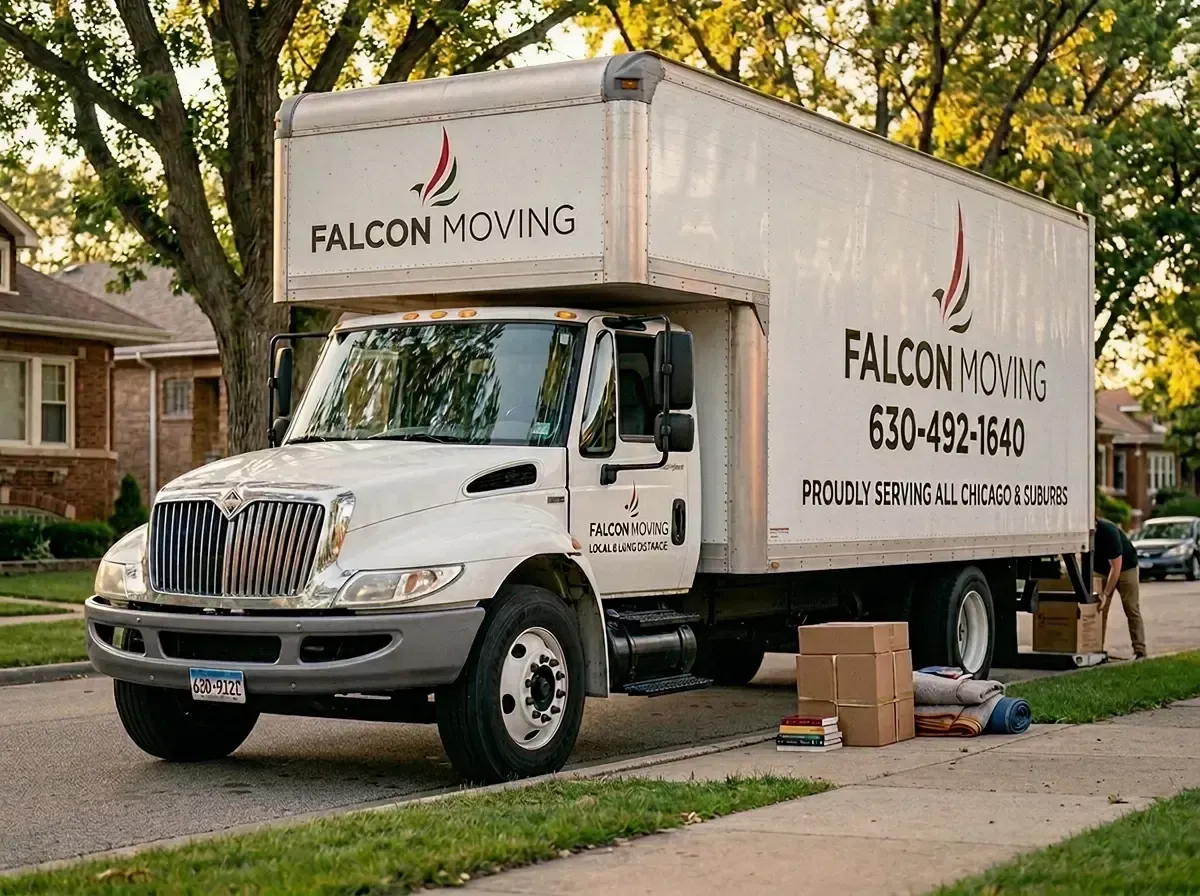
Once an address is set, the move itself comes down to access: stairs, parking, elevator windows, and how close a truck can get to the door. Falcon Moving's Elgin movers page covers local service, and the Elgin neighborhood guide helps narrow the search by area. When the dates are firm, request a moving quote with both addresses and a walk-through list.