
Glen Ellyn is a DuPage County village of about 28,750 people with a walkable downtown, a Metra station on Crescent Boulevard, and housing costs roughly double Elgin's. The median home value reaches $544,000 and the median household earns $140,938, according to the Census Bureau's 2020–2024 American Community Survey. A move here works when the budget covers the housing payment, the property tax bill, and the commute, in that order.
What living in Glen Ellyn costs
- Median household income: $140,938
- Median home value: $544,000
- Median gross rent: $1,433 a month
- Median monthly owner costs with a mortgage: $3,317, including taxes and insurance
- Median monthly owner costs without a mortgage: $1,331
- Households: 10,698, with 2.64 people per household
The figures come from the 2020–2024 American Community Survey five-year estimates, in 2024 dollars. Owner-occupied homes make up 78.3% of the village's housing, and 68.2% of adults hold a bachelor's degree or higher. The rent figure looks low next to the home value because much of the rental stock is smaller and older than the owner-occupied housing.
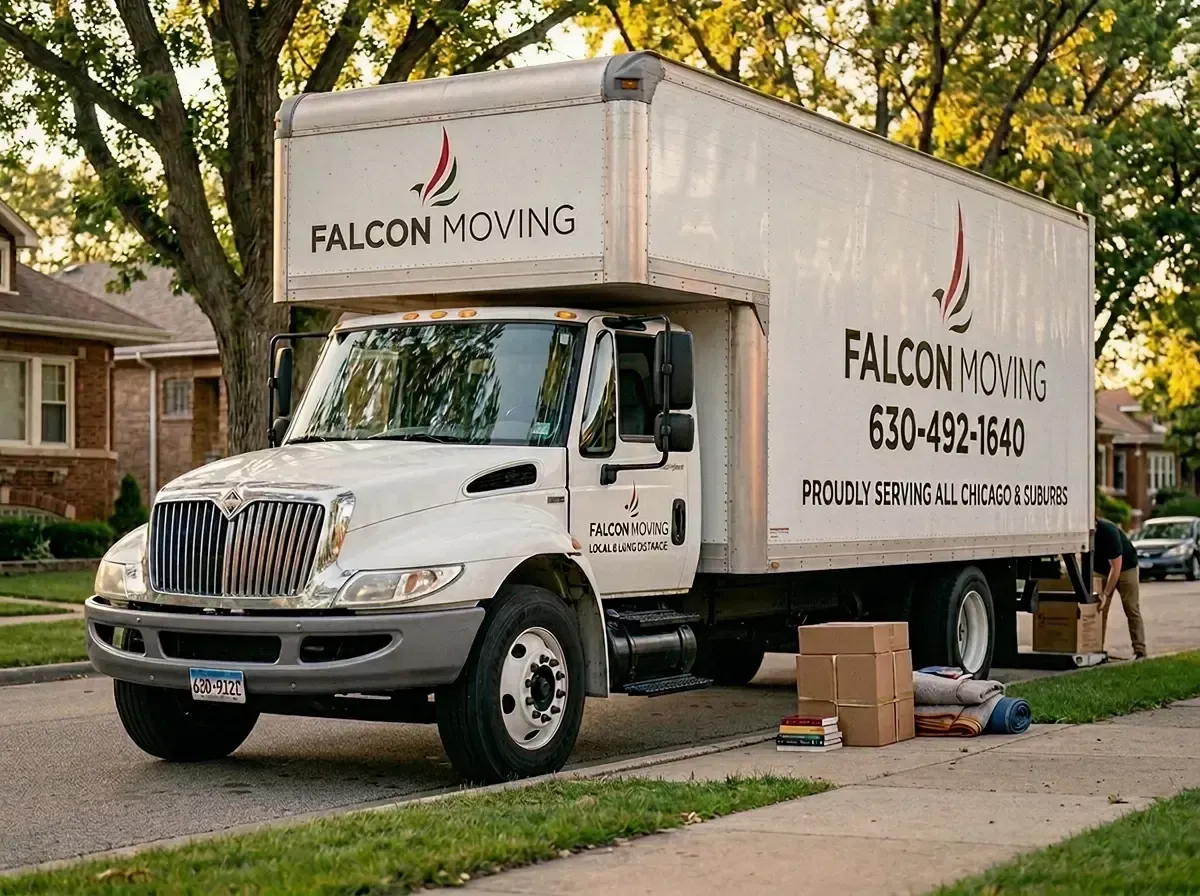
Moving into the village usually means handling either a downtown building with an elevator or a house on a narrow street with alley access. Glen Ellyn movers plan a quote around parking, stairs, and the distance from the truck to the door.
Housing and neighborhoods
Downtown Glen Ellyn clusters around Crescent Boulevard and Main Street, within walking distance of the station, restaurants, and shops. Around Lake Ellyn the streets hold older homes on mature lots. Further out, mid-century ranches and newer construction spread toward the village edges, and the price gap between a small downtown condo and a four-bedroom house on a large lot is wide.
Property taxes follow the tax code, not the village name. DuPage County publishes a rate book for each tax code, and the county clerk's office lists the exact rate for a parcel. Ask for the tax code and the last two bills on any house you consider; the monthly difference between two similar homes can run into the hundreds.
What the price buys
The premium over a neighboring suburb pays for three things: a walkable downtown, a short walk to the train from much of the village core, and mature neighborhoods with larger lots and taller trees. It also pays for the school districts and for DuPage County services. Buyers who do not need any of those often find better value a few towns west.
Houses near Lake Ellyn and the historic core trade at a premium for lot size and character, while condos and townhouses closer to Roosevelt Road give a lower entry point with less maintenance. A first-time buyer should compare the monthly cost of a condo association fee against the maintenance budget on an older house.
The commute
The Glen Ellyn station on the Union Pacific West line sits in fare Zone 4, with a $6.75 one-way ticket to a downtown station and a $135 monthly pass, per Metra's fare table. The station address is 551 Crescent Boulevard, with a waiting room open weekday mornings. I-355 and I-88 give drivers access to the western suburbs and the tollway network.
Schools
Glen Ellyn School District 41 covers elementary and middle school grades, and Glenbard Township High School District 87 operates Glenbard West in the village. College of DuPage sits in Glen Ellyn as well. Attendance boundaries follow address, so confirm the assigned schools for a specific home instead of assuming a village-wide answer.
Parks and trails
Lake Ellyn Park covers 25 acres around a ten-acre lake, with a loop path, picnic areas, tennis courts, and the Lake Ellyn Boathouse. The Illinois Prairie Path runs through downtown, with access at Prairie Path Park just east of Forest Avenue, and the Great Western Trail crosses the village with an accessible connection at Ackerman Park on St. Charles Road. The Glen Ellyn Park District maintains close to thirty parks, and the Village Links course gives golfers a 27-hole public option.
Daily life and errands
Most everyday shopping sits along Roosevelt Road and in the downtown blocks, and the village keeps a small-town schedule: farmers markets and festivals downtown, quiet residential streets a few blocks away, and a short drive to the larger retail corridors in Wheaton, Lombard, and Oak Brook. Households moving from a city apartment often notice how much of the week happens within a few miles of home.
Costs beyond the mortgage
Utilities follow the same pattern as the rest of northern Illinois. Retail electricity averaged 12.21 cents per kilowatt-hour statewide in 2024, according to the Energy Information Administration, and gas heat pushes winter bills above summer ones. Water and sewer run on village accounts.
The Illinois grocery change applies here too: the state dropped its 1% grocery tax on January 1, 2026, the RTA transit grocery tax still applies, and the village or county may add a local 1%. Restaurant meals carry the full general merchandise rate.
Household services cost more with larger homes and larger lots. Lawn care, snow removal, and exterior maintenance on a 2,500-square-foot house with mature trees run higher than the same services on a townhouse, and the first year of ownership is when most new residents discover the difference.
Who tends to settle here
Families with school-age children, Union Pacific West commuters, and households downsizing from a larger house but unwilling to give up a walkable downtown make up much of the demand. Buyers who work remotely and need more space for the money usually look further west along the same rail line.
Planning a move to Glen Ellyn
Moving day in the village usually turns on access rather than distance. Downtown buildings have elevators, loading zones, and limited curb space. Older neighborhoods have narrow streets, mature trees, and garages reached through alleys. Ask the Village of Glen Ellyn about parking and right-of-way rules for a moving truck, and give the crew the building type, floor, and elevator dimensions before the quote is set.
Families often plan around the school calendar, which puts most moves in late spring and summer and raises demand for crews on weekends. A midweek date usually costs less and books with more notice. If the closing dates do not line up, short-term storage bridges the gap.
Falcon Moving handles local moves across DuPage County and packing for households that would rather not wrap a kitchen themselves.
Set up the quote
Send both addresses, your target dates, and a room-by-room list, and the crew can price the job against the access at each end. Request a moving quote when the dates are firm, or start with the Glen Ellyn living guide if the neighborhood decision is still open.